← Back to list
Strategy of the Week: Bollinger Bands Breakout
2024-05-10Strategy#Strategy#Bollinger Bands#Technical Analysis#Beginner
📑 Table of Contents
- Understanding Bollinger Bands
- 📉 The Breakout Strategy
- ⚙️ Setup & Settings
- ✅ Entry Rules
- 🛑 Risk Management
- ❓ FAQ
Understanding Bollinger Bands
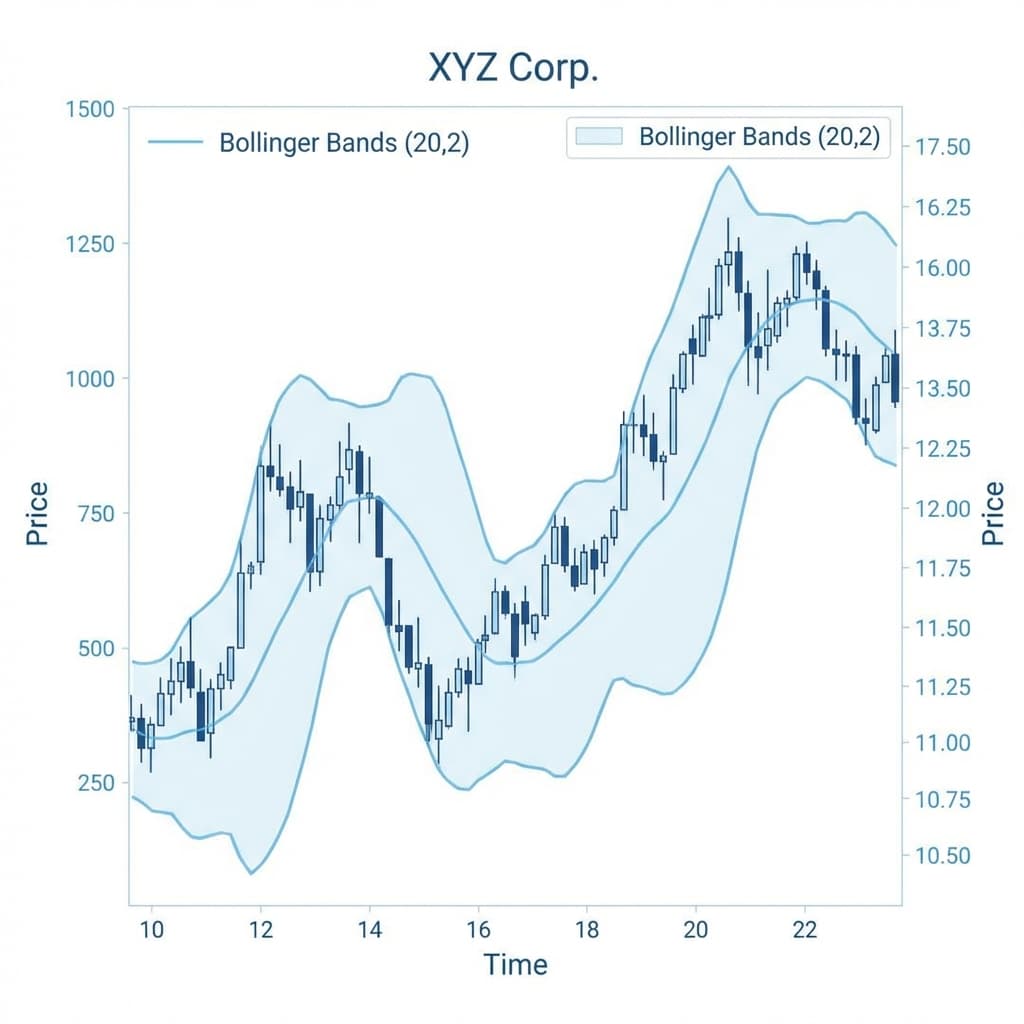
Bollinger Bands are a volatility indicator consisting of a central Moving Average (usually 20 SMA) and two outer bands (standard deviations).
- Contraction: Low volatility (the "Squeeze").
- Expansion: High volatility (the "Breakout").
The Breakout Strategy
The strategy focuses on catching the price movement when it breaks out of a consolidation phase.
"Volatility cycles from low to high. We wait for the quiet, then trade the noise."
Setup & Settings
- Timeframe: 1 Minute or 5 Minutes.
- Indicator: Bollinger Bands (Period 20, Deviation 2).
- Expiry Time: 2-3 Candles (e.g., if 1m timeframe, 3m expiry).
Entry Rules
Call Option (Up)
- The bands are squeezed tight (low volatility).
- A green candle closes above the upper band.
- Enter immediately on the next candle open.
Put Option (Down)
- The bands are squeezed tight.
- A red candle closes below the lower band.
- Enter immediately on the next candle open.
Risk Management
- Avoid trading during major news releases.
- If the breakout candle has a huge wick, it might be a false breakout. Wait for confirmation.
- Never invest more than 2-5% of your balance per trade.
❓ FAQ
What is the best timeframe for this strategy?
It works best on 1-minute and 5-minute timeframes for binary options scalping.
Can I use default settings?
Yes, the default (20, 2) settings are standard and widely used by professionals.
Does this work for Crypto?
Yes, Bollinger Bands work well on crypto assets, especially during periods of high volume.